Aspirational Toilets for a Viksit Bharat: Why Circular Sanitation Must Lead the Way
Aspirational Toilets for a Viksit Bharat: Why Circular Sanitation Must Lead the Way
By V. Srinivas Chary and Manjusha Manchala
The recent announcement that 29,000 modern aspirational toilets will soon be built across 3,920 municipalities is a significant and welcome moment for urban India. It signals a shift towards better design, inclusivity, safety, and user experience. Prima facie, this feels like the next logical step after Swachh Bharat Mission's enormous progress in expanding toilet access.
But there is a deeper question we need to ask right now, before thousands of new facilities are rolled out:
1. What makes a toilet truly aspirational?
If aspirational toilets simply mean cleaner spaces, touchless fixtures, better lighting, accessible design, child- and gender-friendly amenities, then we are only halfway there. These improvements matter, but they do not address the most serious problem in India's sanitation challenge: what happens after the flush.
Because unless aspirational toilets also treat waste safely and locally, we will continue to push harmful sludge and contaminated water into drains, lakes, rivers, and groundwater. The public health and will improve, but the environmental and public health burden will worsen somewhere else.
This is why India now needs circular public toilets to become the new definition of aspirational.
2. The Back-End Problem We No Longer Have the Luxury to Ignore
As highlighted in my earlier article on World Toilet Day, India's sanitation challenge is no longer just about safe toilet access. It is about safe waste treatment. Only about 30 percent of urban households are connected to sewers, and an estimated 72 percent of wastewater flows untreated into the environment.
Most public and community toilets discharge into septic tanks. When these fill up, the sludge is often dumped untreated into open fields, storm drains, canals, or waterbodies. The result is groundwater contamination, waterborne disease spread, and enormous public health risks.
Put simply:
A well-built public toilet that does not treat waste is not aspirational. It is incomplete.
If we continue to expand public toilet infrastructure without fixing treatment, we are only shifting the problem from one neighborhood to another.
3. Circular Toilets: A Smart, Scalable, India-Ready Solution
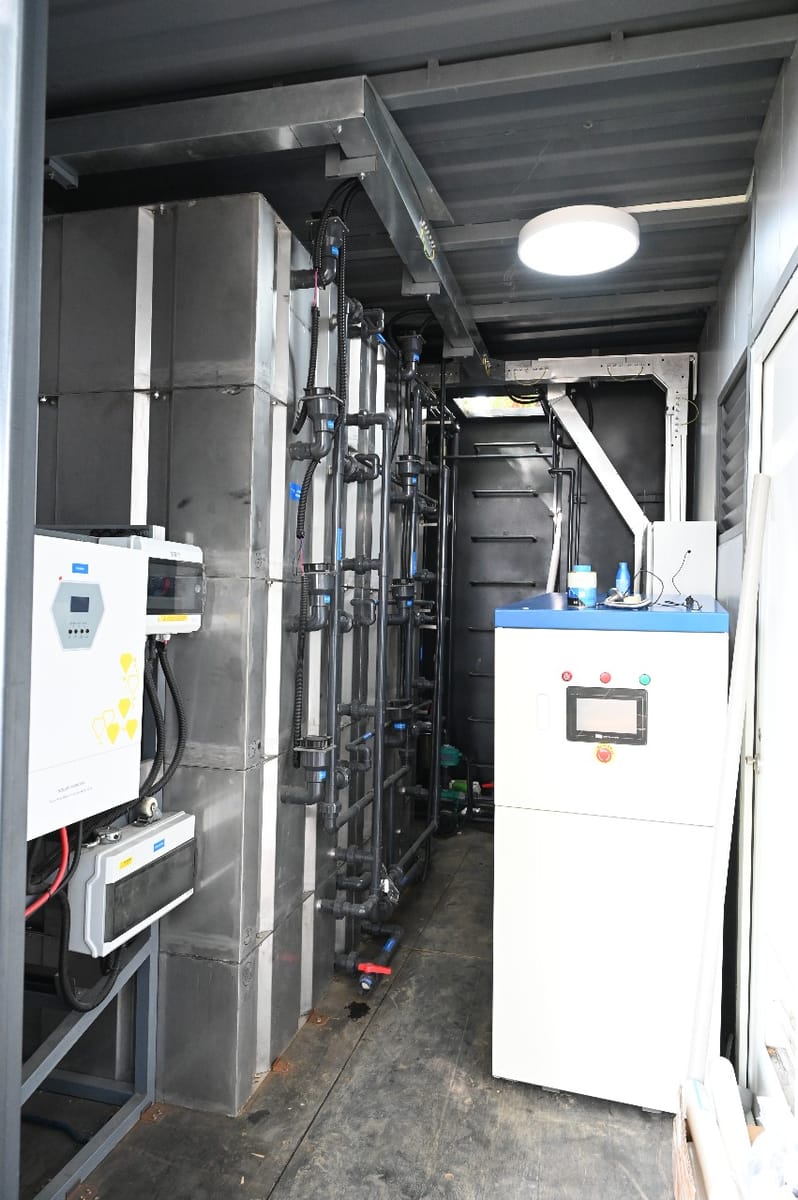
Circular toilets offer an alternative that aligns perfectly with the Government's aspiration for modern, eco-friendly, and dignified public sanitation facilities. They are not theoretical. As noted in my earlier article, India already has a growing base of innovative treatment technologies that work at the scale of a single toilet or a cluster of toilets. These include:
- On-site waste treatment units that kill pathogens without external desludging
- Systems that recycle treated water for flushing, reducing freshwater use drastically
- Compact, energy-efficient solutions that recover resources such as biochar
- Plug-and-play models that need no sewer connection and minimal civil work
These technologies neutralize pathogens right where waste is produced. Instead of creating a sludge disposal problem for municipalities, they close the loop.
This is what makes a toilet aspirational, not only how it looks and feels, but how responsibly it manages waste behind the scenes.
4. Why Circular Toilets Should Be the Backbone of Aspirational Sanitation
They eliminate the "flush and forget" problem
Circular toilets treat waste onsite and prevent untreated discharge. The environmental and public health benefits are immediate and measurable.
They reduce water consumption
Recycling flush water drastically cuts freshwater demand—critical for water-stressed municipalities.
They lower O&M burden on cities
Because sludge is treated onsite, the need for costly and irregular desludging is reduced.
They improve public health outcomes
When pathogens are neutralized at source, the chain of transmission through drains, groundwater, and sanitation workers is broken.
They prepare cities for climate resilience
Circular toilets require less water, less energy, and minimal infrastructure—perfect for rapidly growing towns and peri-urban areas.
They unlock new markets and innovation pathways
Aspirational toilets can become the anchor client for circular sanitation startups, just as solar parks accelerated India's renewable energy ecosystem.
5. MoHUA's Vision and India's Opportunity
The scale of the aspirational toilet programme, 29,000 units, is large enough to shape national sanitation norms for the next decade. If these toilets embed circular principles, India can make a bold leap in the global sanitation landscape.
Crucially, the ecosystem is already taking shape:
- BIRAC has launched a national technology challenge to encourage Make-in-India innovations for on-site treatment and circular public toilet solutions
- Startups, R&D labs, engineering institutions, and incubators are developing systems that are safer, more efficient, and more climate-resilient than conventional solutions
- Cities are increasingly open to innovation, especially where sewerage is absent, costly, or difficult to build
By integrating circular toilets into the aspirational toilets programme, MoHUA can catalyse a market, create demand for local manufacturing, open new avenues for startups, and set a global example for sustainable sanitation.
6. What Should Happen Next?
Make circular toilets a formal category under aspirational toilets
Technical guidelines from MoHUA can encourage cities to adopt models that treat and recycle waste onsite.
Promote Make-in-India solutions at scale
Leverage BIRAC's challenge to fast-track pilots, support innovators, and create procurement pathways.
Create demonstration clusters in each state
A few visible, well-maintained circular toilets in high-footfall locations can transform public perception.
Link circular toilets to carbon, climate, and ESG outcomes
These systems offer quantifiable climate benefits, opening doors to blended finance and CSR.
Build municipal capacity for deployment and oversight
Cities and ULBs need orientation on technology selection, performance monitoring, and O&M models.
7. Aspirational Toilets Must Reflect Aspirational Thinking
MoHUA's announcement is an important step toward dignified sanitation in India. But dignity is not only about design. It is also about safety, sustainability, and responsibility. A toilet that looks modern but leaks pathogens into the environment is not aspirational, it is a missed opportunity.
Circular toilets allow us to break from the past. They align with India's climate goals, public health priorities, and technological capabilities. They can redefine what it means to be a sanitation leader. This is the moment to make circular toilets the backbone of aspirational sanitation for a Viksit Bharat.
V. Srinivas Chary & Manjusha Manchala
We look forward to your comments, views and critique. Please feel free to write to us at: vedala.srinivaschary@gmail.com
Subscribe to our Insights
Get the latest updates on sanitation technology and urban policy.